
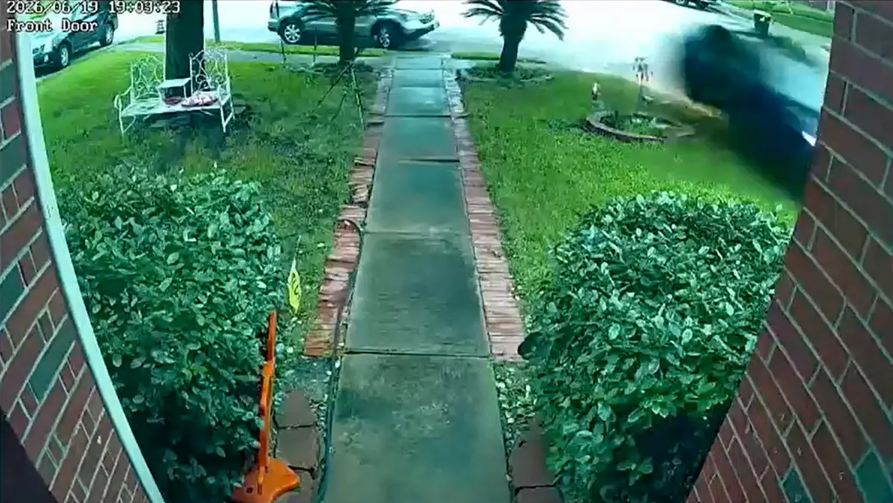
A Tesla operating in automated driver-assistance mode plowed into the home of a 76-year-old Texas woman, leading to her death. The driver, Michael Butler, was behind the wheel of a Tesla Model 3 when the car “decided” to leave the road and slam into a brick home in Katy, Texas, some 30 miles west of Houston. According to the Harris County sheriff’s office, the vehicle had been traveling down the residential street “at a high rate of speed.”
There was no evidence that the driver was intoxicated at the time of the crash. Butler also cooperated with law enforcement — it was Butler himself who described what happened, stating that the Tesla’s automated driving-assistance system had been operating at the time.
The tragedy is difficult to imagine. The car slammed into the home of 76-year-old Martha Avila, breaking through the walls and into the house, striking Avila as she was inside. Though Avila was rushed to the nearest hospital by Life Flight, she succumbed to her injuries. A second victim, a man, survived but was injured in the crash. Avila’s door camera caught the moment the Tesla drove into the house. “This is the car flying into my home. My mom didn’t deserve this,” said Avila’s daughter, who shared the video on Facebook.
Traveling at High Speed
A neighbor who witnessed the crash said the car had been traveling at somewhere between 60 and 70 miles per hour. “We saw a car flying by down the street,” the neighbor said. “Next thing we know, we hear it hit that curb in that driveway and it ran into the house.” Another neighbor said they could hear Butler screaming as the car rushed down the street.
While Butler was forthcoming about the tragic event, it bears stressing that none of the three Autopilot capabilities offered by Tesla make for a fully autonomous vehicle. Whether a driver chooses Basic, which matches vehicle speed to that of nearby cars and helps drivers stay in their lanes; Enhanced, which can change lanes, guide cars from on-ramp to off-ramp on highways, and autopark; or the Full Self-Driving system — the person behind the wheel should never assume that all will be well. Tesla does stress this fact, instructing owners that since these systems are not foolproof, drivers must pay attention at all times, with hands on the steering wheel, ready to take over if the car acts unexpectedly — as happened in the tragedy that killed Martha Avila. And while Tesla buyers clamor for the Autopilot function, there have been many reported glitches and issues.
In 2023, following a two-year investigation of 830,000 Tesla cars by the National Highway Traffic Safety Administration (NHTSA) — essentially every car Tesla manufactured since 2014 — Tesla was forced to recall over two million vehicles. The federal agency faulted the automaker for not doing enough to ensure that drivers remain alert while using Autopilot. Crashes and fatalities were the unhappy result. To be precise, the damage attributed to Autopilot consisted of 16 collisions, 15 injuries, and one death.
Tesla Website Warning
Tesla responded by issuing an online software update designed to keep drivers alert and aware. Yet accidents have continued. Since the update, some 20 additional crashes have been reported. To its credit, Tesla’s website carries a clear warning that self-driving is not the same as autonomous driving: “Autopilot and Full Self-Driving Capability are intended for use with a fully attentive driver, who has their hands on the wheel and is prepared to take over at any moment. While these features are designed to become more capable over time, the currently enabled features do not make the vehicle autonomous.”


